


Introduction
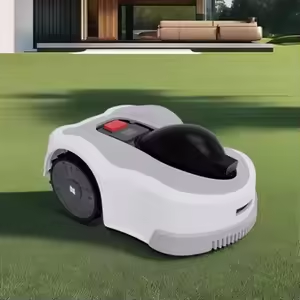
Understanding modern lawn care is getting easier thanks to smart automation. Wireless Robot Lawn Mower Technology Explained for Beginners helps new users grasp how these devices cut grass efficiently without physical boundary wires or constant human control. This guide breaks down the core systems, features, and benefits in a simple way so anyone can understand how these machines work and why they are becoming popular.
How Wireless Robot Lawn Mowers Work
Wireless robot lawn mowers rely on a combination of sensors, GPS-based navigation, and onboard computing. Instead of using buried boundary wires, they map your lawn digitally and move within virtual boundaries.
Key processes include:
- Mapping the lawn using GPS or RTK positioning
- Detecting obstacles with sensors like ultrasonic or LiDAR
- Automatically adjusting routes for complete coverage
- Returning to a charging dock when battery is low
This allows the mower to operate independently with minimal human intervention.
Core Technologies Behind the System
At the heart of these machines are several advanced technologies working together:
- Artificial Intelligence (AI): Helps the mower learn lawn patterns and optimize cutting paths
- GPS/RTK Positioning: Provides centimeter-level accuracy for navigation
- Sensor Fusion: Combines data from multiple sensors for safe movement
- Machine Learning Algorithms: Improve performance over time based on terrain and obstacles
Wireless Robot Lawn Mower Technology Explained for Beginners becomes much easier to understand when you see how these systems work together to create a fully autonomous mowing experience.
Benefits of Wireless Automation
These smart lawn mowers offer several advantages over traditional models:
- No need for boundary wire installation
- Time-saving automation for homeowners
- Consistent and even grass cutting
- Remote control via smartphone apps
- Reduced manual maintenance effort
With these benefits, they are becoming a preferred choice for modern households.
Installation and Setup Overview
Setting up a wireless robot mower is typically straightforward. Users usually need to:
- Charge the device fully
- Connect it to a mobile app
- Define lawn boundaries digitally
- Run an initial mapping session
After setup, the mower can operate on its own schedule, making lawn care almost effortless.
Common Misconceptions
Many beginners assume these devices are complicated or unreliable. However, advancements in navigation and AI have made them highly accurate and efficient. Once users understand wireless robot lawn mower Technology Explained for Beginners, it becomes clear that these machines are designed for simplicity and long-term ease of use.
Conclusion
Wireless robot mowers represent a major shift in home maintenance technology. By combining smart navigation, AI, and sensor systems, they deliver a fully automated lawn care experience. As highlighted throughout this guide, Wireless Robot Lawn Mower Technology Explained for Beginners shows how accessible and practical these systems have become for everyday homeowners.
