


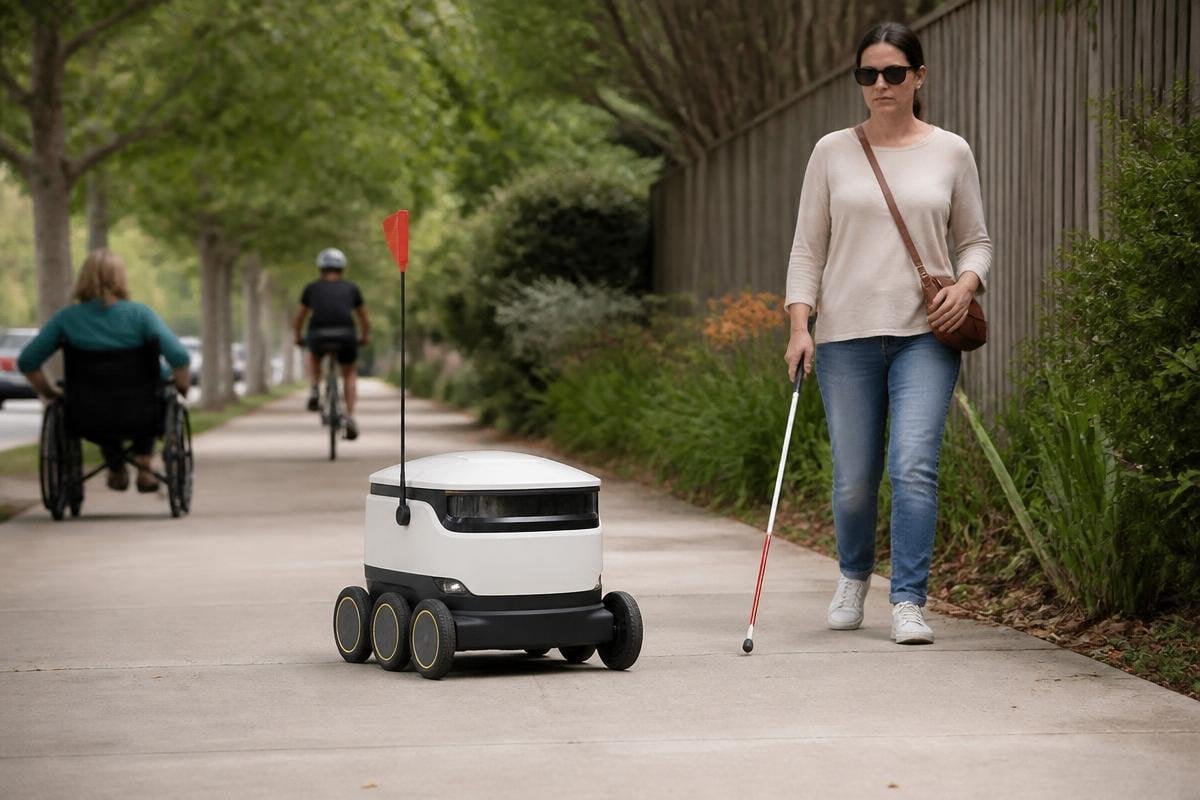
A robot that opens a door, moves a parcel, or checks on a patient can affect people who never agreed to use it. The rules for those actions need to exist before the machines become common in homes, streets, and workplaces.
- Permission matters: a robot should collect only the data its task needs.
- Human control matters: people need a clear way to stop or question its actions.
- Responsibility must be named: someone must answer when the robot causes harm.
A robot acts on more than its owner
A robot vacuum mainly affects the person who buys it. Delivery robots on a footpath affect pedestrians, wheelchair users, cyclists, and anyone whose image or voice their sensors record.
The owner is only one part of the ethical problem. That wider effect changes how a robot should be designed. A machine working in a shared space needs rules for speed, right of way, recording, and contact with people. Those rules should be written in plain language, not hidden inside a product manual.
In a workplace, a robot that tracks movement to avoid collisions may also create a record of where people stand and how they work. If the system uses that record for staff ratings, the original safety purpose has changed.
Consent needs to be specific
People often accept a service without understanding what its sensors can collect. A camera may watch a hallway, a microphone may hear nearby speech, and a mobile robot may store maps that show private rooms. Calling this broad approval does not answer the practical question: what data does the robot need for this task?
Good consent should name the sensor, the purpose, the storage period, and the people who can access the data. It should also give someone a usable way to refuse. A visitor entering a building cannot negotiate with a robot at the door, so the building owner carries more of the duty.
A consent rule has little value if no one can tell which robot collected the data or where it went. Reports at Robot24.com can tie that question to a named system, its sensors, and the site where it runs. That evidence leads to the next test: whether a person can take control when the robot fails.
Human control must survive a failure
Even a robot can follow its software and still produce a bad result. Its camera may miss a person, its map may be out of date, or its model may assign the wrong meaning to a request. Ethical design starts with the failure case rather than the smooth demonstration.
People need a visible stop control, a clear warning when the robot is unsure, and a record of the action that caused a problem. They also need a route for appeal when an automated decision affects access, work, care, or safety.
I’d require a named person to review serious robot decisions before these systems enter shared spaces.
That person cannot be a label added after an incident. They need access to logs, authority to pause the system, and enough technical knowledge to explain what happened. A company that cannot provide those basics has not finished the design.
Fair treatment needs a test
A robot may work well for one group and poorly for another. A voice system may miss some accents. A camera system may perform differently under varied lighting or with mobility aids. These are practical faults, but they also become ethical faults when the machine controls service, access, or safety.
Testing should cover the people and places the robot will meet. The results should state where the system works, where it fails, and what action follows from each failure. A single success video cannot answer those questions.
The person affected by a robot should also know when automation is making a decision. That notice does not fix every problem, but it gives them a chance to ask for human review.
A buying checklist for robot ethics
Before approving a robot for a home, workplace, or public site, check these points:
- Name the task: write down what the robot must do and what falls outside that job.
- List the sensors: record what each camera, microphone, scanner, and location system collects.
- Set human control: test the stop button, manual mode, warning system, and review process.
- Check the failures: run the robot in the lighting, noise, floor conditions, and crowd levels it will face.
- Assign responsibility: name the person who can pause the system and answer complaints.
- Plan the exit: state how data is deleted and how the robot is removed when the trial ends.
These checks turn ethics into a design task with owners and tests. They also give buyers a reason to reject a machine that cannot explain its own limits.
Robots will become ordinary through small decisions: which data they keep, who can stop them, and who answers after a failure. Set those rules before purchase orders and public use make them harder to change.
